The 100-Meter Rule: When Tribal Knowledge Becomes Policy
2026-10-24
In a design review for a pharmaceutical plant, a senior engineer states it with complete confidence:
“A penicillin facility must be at least 100 meters from any other drug manufacturing facility. Otherwise you risk cross-contamination.”
Nobody pushes back. Pharma is tightly regulated, cross-contamination is serious, and the engineer has the seniority to make the statement stick.
But one question matters more than all the nodding heads: where does 100 meters come from?
The GMP texts people usually cite, such as the US FDA’s regulations and the EU GMP Guide, require penicillin operations to have separate facilities and separate air handling, and require cross-contamination controls proportionate to assessed risk. We could not find a fixed distance in any of them.
That does not make 100 meters wrong. It may well have been a sound answer for one specific project. This article is not about the engineering. It is about something far more common: rules that everyone in an organization follows, but no one can trace back to a source.
Executive summary
- Every operational decision has three layers: the conclusion, the reasoning, and the conditions under which it holds. When knowledge is passed on informally, usually only the conclusion survives.
- A conclusion stripped of its reasoning gradually gets treated as policy, even if it never was one.
- The cost: self-imposed constraints, a false sense of safety, and an organization that cannot adjust its own rules.
- Writing the conclusion into an SOP does not fix this unless the rationale and conditions are written down with it.
What travels, and what stays behind
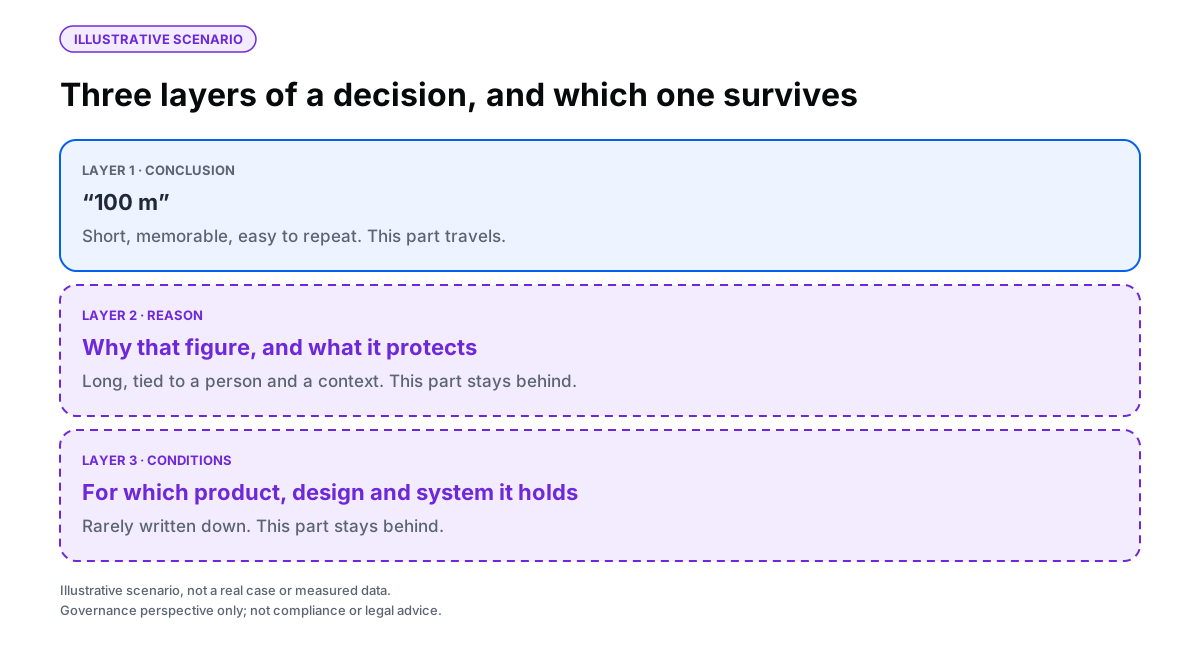
Figure 1. The conclusion travels; reason and conditions stay behind (illustrative example).
Any operational decision really has three layers:
- The conclusion: 100 meters.
- The reasoning: why that number, and what risk it protects against.
- The conditions: which products, which layout, which ventilation design, at what point in time.
The conclusion is short and easy to repeat. The reasoning and conditions are long and tied to a particular person and situation. That is the tribal part of the knowledge: it lives in the head of whoever made the call, and rarely makes it onto paper.
So every time the knowledge is handed on, the lightest layer travels and the heaviest stays behind. After a few handovers, from designer to shift lead, from shift lead to new hire, the conclusion has come loose from its reasoning. It is no longer “the answer to situation X”. It is simply “the rule”.
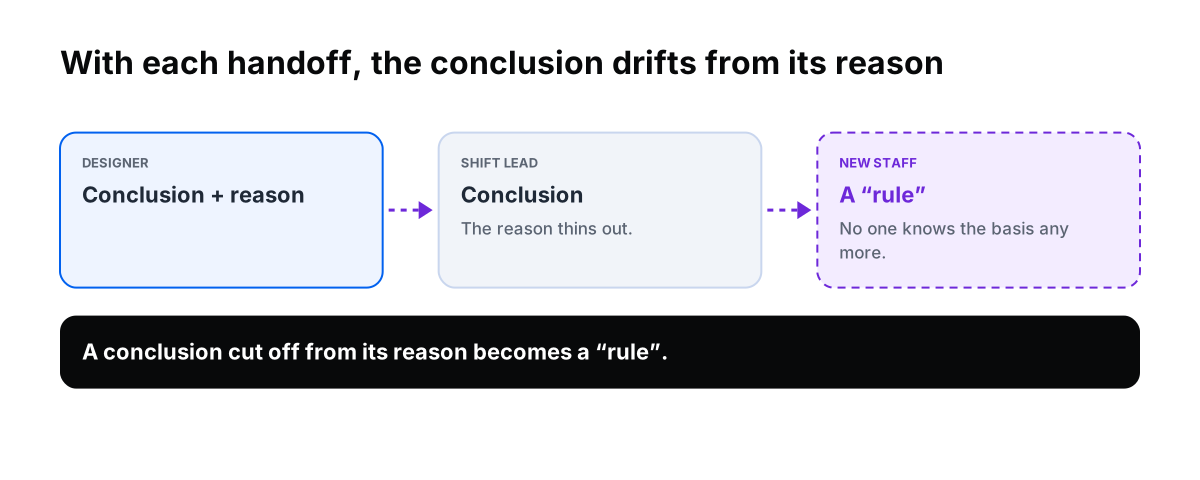
Figure 2. The handoff chain separates the conclusion from its reason.
Seniority speeds this up. A statement from a respected veteran is easily received as if it were written policy, and few people want to be the one asking “says who?”
This is where many knowledge management programs fall short. Converting tacit knowledge into documents often captures only the conclusion. Putting “minimum distance: 100 m” into an SOP does not make the knowledge clearer. It just makes the conclusion harder to challenge, because now it carries an approval stamp.
Three costs the organization pays
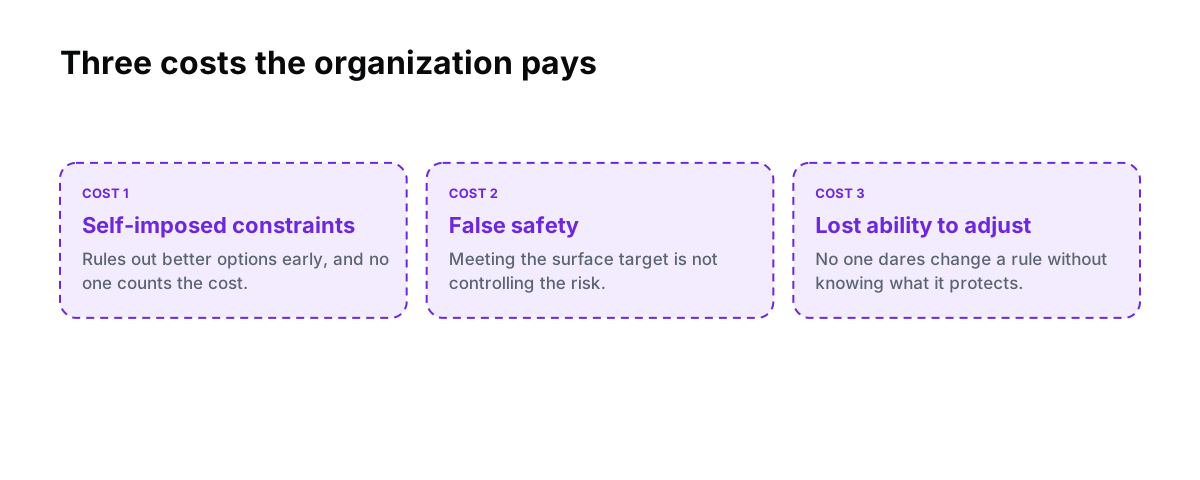
Figure 3. Three costs of losing the reason behind a rule.
Self-imposed constraints. A number with no known basis can rule out site layouts, designs or investments that might have been better. Nobody accounts for this cost, because nobody knows a choice was ever made.
A false sense of safety. When the team focuses on meeting the number, the controls that actually matter can get less attention. Hitting the surface target is not the same as controlling the risk the target once stood for.
An organization that cannot adapt. When a new product, new technology or plant expansion comes along, nobody dares change the rule because nobody knows what it protects. When the one person who understood it retires, the rule meets one of two fates: it becomes untouchable, or it gets dropped on a whim. Both are risky.
AI amplifies the problem. A chatbot trained on your SOPs will repeat “100 meters” even more confidently than the engineer did, and it will be no better at answering “why?”
Not just a pharma problem
Ask the same question in a food, seafood or tea processing plant:
- Why is the drying temperature set at that value?
- Why are retention samples kept for exactly that many months?
- Why does a purchase order above a certain amount need three signatures?
- Why can’t two products run on the same line in one shift?
Each may have a perfectly good reason. The more important question is: who in the company can explain it today, and does that explanation exist anywhere outside their head?
The processes are still there. The documents are complete. But the ability to explain, and therefore the ability to change, may have been lost long ago without anyone noticing.
Self-check: five questions for any “rule”
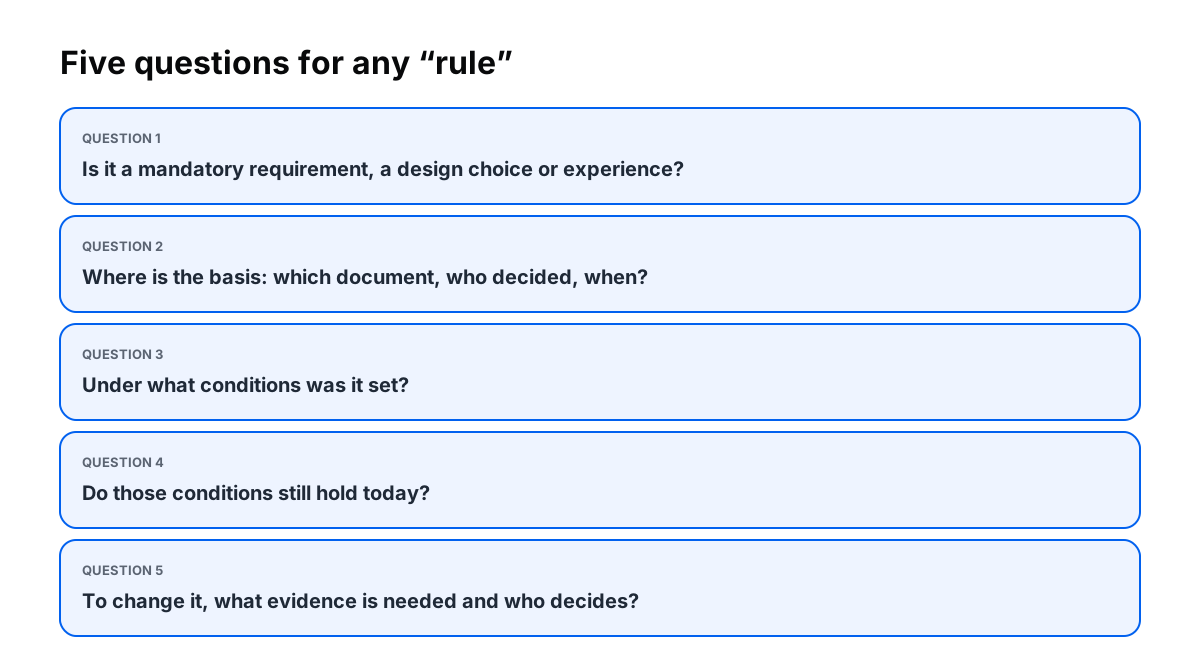
Figure 4. Five questions to test a rule.
Pick one important rule in your company and ask:
- Is it a mandatory requirement (law, standard, contract), a design choice, or experience?
- Where is the source: which document, who decided, and when?
- Under what conditions was it set?
- Do those conditions still hold today?
- To change it, what evidence would be needed, and who has the authority to decide?
If you cannot answer questions 2 and 3 for most of your important rules, your company is storing conclusions, not knowledge.
The number is not the problem
The 100-meter figure may be right, excessive, or right once and outdated now. The real issue is that the organization no longer knows why it believes it.
Knowledge is not just the answer. It is the answer together with the reasoning that makes it true, the conditions that limit it, and the evidence that lets someone else verify it. A company can hold thousands of pages of documentation and still lose its knowledge if those connections are not preserved.
The goal of knowledge management is not to get everyone to remember the same number.
It is to help them know when that number still makes sense.
Next steps
- Assess your organization’s knowledge management maturity: Knowledge Management Maturity Assessment
- Read the pillar article: From Individual Knowledge to Organizational Knowledge
- Related: Tacit vs. Explicit Knowledge: Why the Difference Matters · When Key People Leave, What Do They Take With Them?
Source note
US FDA regulations (21 CFR 211.42(d) and 211.46(d)) require penicillin manufacturing to take place in separate facilities with completely separate air-handling systems. EU GMP Part I, Chapter 3 (section 3.6) requires cross-contamination to be prevented through appropriate facility design and operation, with measures proportionate to risk under quality risk management principles. The opening scenario is illustrative. This article is a management perspective, not compliance or legal advice.
Does this describe your organization?
Does this sound familiar to your organization?