
Running Is Not the Same as Being in Control
2026-10-24
Starting on 14 October 2026, Ukraine’s military began reporting an unusual problem: Starshield receivers, the military version of SpaceX’s Starlink, stopped working when mounted on fast-moving objects. Ukrainian forces still had their soldiers, drones and artillery. But missions that depend on constantly updated information, from interceptor drones to front-line logistics, were affected almost immediately.
This article is not about the politics or who is to blame. It uses the episode as a lens for a question every operating executive should be able to answer: your systems are still running, but are they still showing you what is actually happening, at the moment you need to see it?
Executive summary
- An organization can keep all its people, tools and procedures and still lose the ability to coordinate when the information flow connecting them breaks down.
- The real danger is rarely a system crash. It is a system that keeps running while its data quietly stops reflecting reality.
- Many management systems work well at a slow cadence (the monthly review) but fail at the cadence of incidents (the shift, the hour).
- Four questions to test yourself: can the organization see, connect, direct and control?
What happened, and what remains unclear
According to Reuters and CNN reporting in mid-October 2026, restrictions were placed on the Starshield service used by Ukraine’s armed forces. Ukrainian officials said terminals stopped functioning at speeds of roughly 130–160 km/h, which hampered interceptor drones, mid-range strike drones, logistics, communications and reconnaissance. One artillery unit in eastern Ukraine told Reuters that its link to headquarters was interrupted and connection speeds dropped as soon as the restrictions took effect.
Three caveats matter if the analogy that follows is to be credible:
- This was not a total blackout. The heaviest impact was reported on equipment mounted on fast-moving platforms.
- Who made the decision is disputed. Different reports point to the White House or to SpaceX, and the parties involved have denied responsibility or offered conflicting accounts.
- The story is still developing. As of 23 October 2026, Ukrainian officials said the restrictions had not been fully lifted.
The telling detail: the link failed exactly where speed mattered most
What makes this worth a manager’s attention is not that a supplier can restrict a service. It is where the system broke.
Connectivity did not vanish. It still worked under some conditions. But it degraded precisely where speed is everything: an interceptor drone has to move fast to reach its target, and a link that only works at rest is close to useless for that job.
Put differently: the capability was still there, but it no longer worked at the pace the work demanded.
A battlefield and a factory are worlds apart in what is at stake. The point here is the shape of the problem, not a comparison of consequences.
On a factory floor, what counts as “speed”?
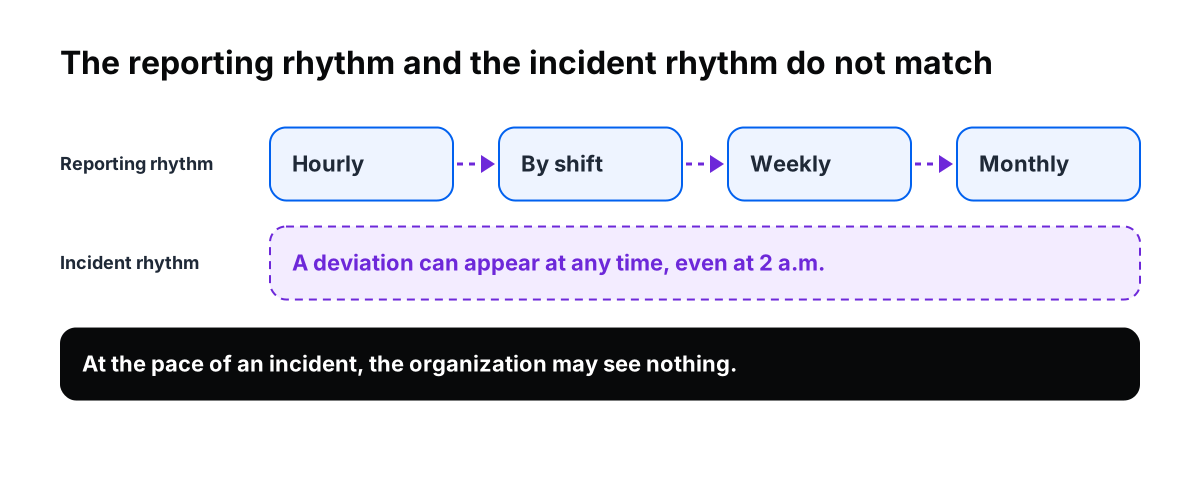
Figure 1. The gap between the reporting rhythm and the incident rhythm.
Most small and mid-sized manufacturers have a reporting system. The trouble is that the cadence of that system rarely matches the cadence of incidents.
A seafood processing plant records temperatures at a critical control point on paper forms. Operators fill them in hourly, the shift lead signs at the end of the shift, QA consolidates the sheets into Excel at the end of the week, and leadership reads a monthly report. At 2 a.m., the temperature exceeds its limit for a period of time. The operator writes it down, but nobody with decision authority knows until the next morning, by which time the batch has moved on to the next stage.
That plant’s monthly report may still look fine. The records are complete. No department failed at its own job. Yet at the speed of the incident, the organization saw nothing.
This is the same structure as the Starshield episode: the system performs well “at rest” (periodic review) and loses its usefulness “in motion” (when a deviation needs action now).
Three things leaders tend to confuse
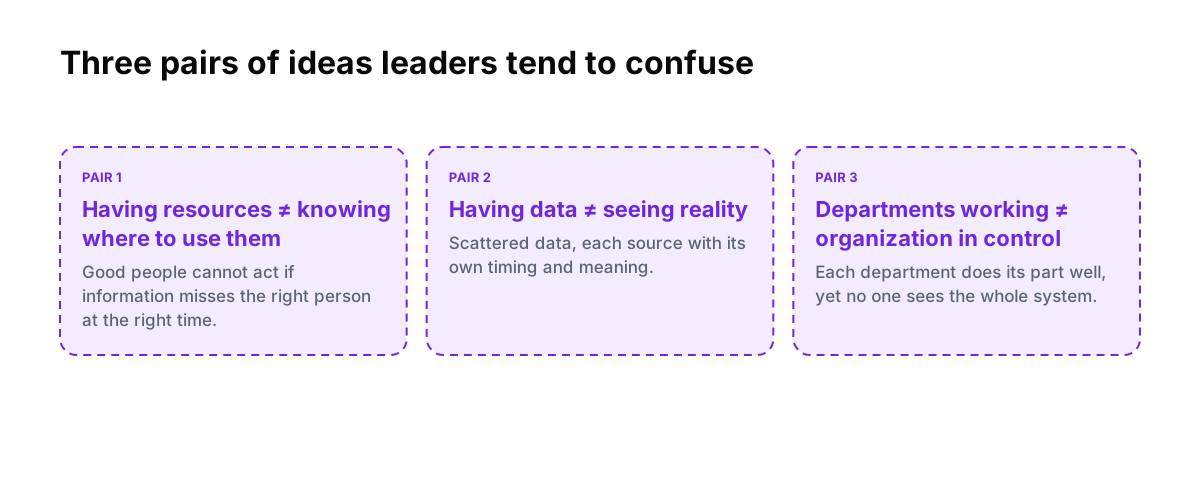
Figure 2. Three pairs of ideas that get confused.
When assessing management capability, it is easy to treat three pairs of ideas as if they were the same:
- Having resources ≠ knowing where to deploy them. A plant can be full of capable people, but if information does not reach the right person at the right time, they cannot act.
- Having data ≠ seeing reality. Data may sit on paper, in spreadsheets, chat threads, email and software, each with its own timestamp and its own interpretation.
- Departments functioning ≠ the organization being in control. Every function can do its part well while no one sees the system as a whole.
None of these conditions stops the plant. Production continues, reports go out, meetings happen. An organization can keep operating while gradually losing control of its own operations.
Four questions to test operational control
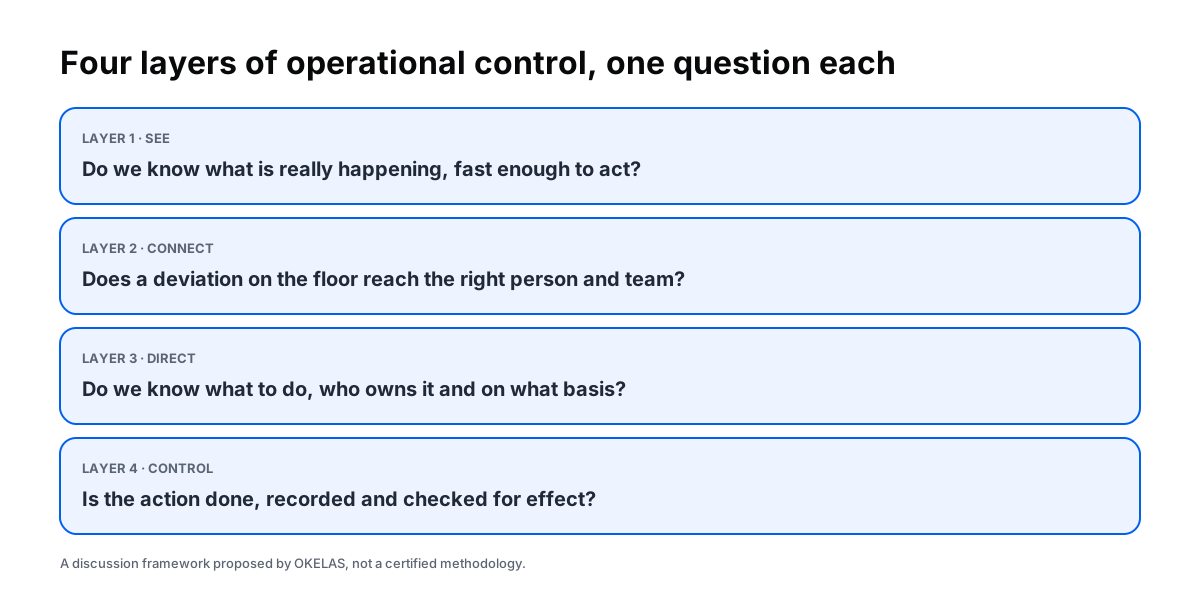
Figure 3. Four layers of operational control; each layer matters only once the previous one exists.
Operational control can be framed as four layers, each of which only matters once the one before it is in place:
| Layer | Question for leadership |
|---|---|
| 1. See | Do we know what is actually happening, fast enough to still act on it? |
| 2. Connect | Does a deviation on the floor reach the people and functions who need to deal with it? |
| 3. Direct | When we see a problem, do we know what to do, who owns it, and on what basis we decide? |
| 4. Control | Are actions carried out, recorded and checked for effectiveness? Would we notice if a fix did not work? |
Many digitization efforts stop at layer one, often in the form of a dashboard. But a polished dashboard without layers two to four behind it is just a better view of problems nobody acts on.
A quick self-check
How many of these sound familiar?
- In operations meetings, departments bring different numbers and time is spent agreeing on which one is right.
- Problems on the floor are usually heard about by phone or chat message before they appear in any system.
- Records and forms are often completed after the fact, at the end of a shift or week.
- When an incident occurs, it takes a while to establish who should handle it.
- Corrective actions get assigned but are rarely checked for effectiveness.
- Preparing for an audit means pulling evidence together from many different places.
This is not a scored test. But if three or more apply, the issue may not be a lack of software or people. It may be the connection between people, process, data and action.
Digitizing departments is not the same as controlling the whole
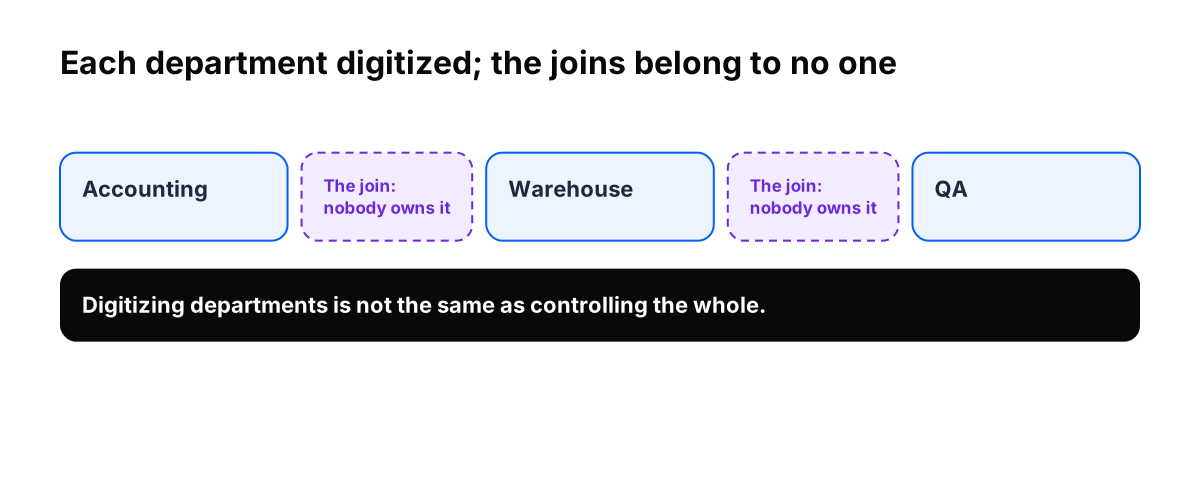
Figure 4. Each department runs well; the joins are left open.
Many manufacturers have bought software function by function: accounting has its package, the warehouse has its own, QA has its spreadsheets. Each part is “digital”. But control lives in the connections between the parts, and those are usually the parts nobody owns.
OKELAS approaches this by starting from how the business actually runs: linking processes to workflows, workflows to the events they generate, and events to evidence, so that information flows on to decisions and actions instead of ending in a report. Software alone does not guarantee this. Data quality, process design and human accountability still decide the outcome.
The bottom line
The management question that matters is not “is the system running?” Almost every system is.
The better question is: does it show us reality at the speed incidents happen, and does it lead to actions we can verify?
An organization’s capability lies not only in what it owns, but in its ability to see, connect, direct and control what is happening inside it.
Next steps
- Take the Digitalization Level Assessment to see where your company stands and what a sensible next step looks like.
Sources (accessed 24 October 2026)
- Reuters (via U.S. News), 16 Oct 2026 — Starlink Disruptions Are Being Felt on the Front Lines of Ukraine
- Reuters, 15–16 Oct 2026 — Order to limit Starshield for Ukraine came from inside White House, sources say
- CNN, 14 Oct 2026 — Ukraine says Starlink restriction disrupting military
- Outlook India (citing President Zelensky and the WSJ), 21 Oct 2026 — Starlink slowdown disrupted Ukraine drone operations
- Snopes, 21 Oct 2026 — Who ordered Starlink, Starshield slowdown in Ukraine? What we know
- Reuters (syndicated), 23 Oct 2026 — Explainer: What is going on with SpaceX’s Starlink and Starshield in Ukraine?
- CNN, 23 Oct 2026 — Ukrainian officials say Starshield restrictions still in place
Does this describe your organization?
Does this sound familiar to your organization?