
PHP2Shell and AI Readiness: When AI Finds What Your Organization Missed
2026-10-24
On October 21, 2026, the PHP project shipped emergency fixes for two critical vulnerabilities now known as PHP2Shell. PHP runs behind a large share of the world’s websites, and several governments, including Finland, the Netherlands, France and Australia, temporarily took public services offline while they patched. The flaws were found by security researchers working with AI tools.
If you run a manufacturing business, this is more than a technology headline. PHP is one of the most scrutinized codebases in the world, yet the flaw sat there for roughly 14 years. So here is the question worth asking: how much of your own documentation, process and records have been checked many times but never checked completely? And if AI surfaced those gaps tomorrow, could your organization handle what it found?
Executive summary
- PHP2Shell existed for about 14 years. A limited version was spotted in 2024 but not considered significant. The failure wasn’t only “nobody saw it.” It was “someone saw part of it and underestimated it.”
- AI doesn’t replace experts. It does what experts can’t sustain at scale: exhaustive, consistent, repeatable review.
- Attackers have the same capability. The gap between disclosure and exploitation is now measured in hours.
- AI readiness isn’t “do we have AI tools?” It’s whether you have something AI can check, and a way to turn its findings into action.
What happened with PHP2Shell
Updated as of October 24, 2026. The story is still developing.
The flaws. PHP2Shell consists of CVE-2026-109618 and CVE-2026-109619. Both let an attacker with no account run their own code on a server (watchTowr). PHP released fixes on October 21 for the 8.5, 8.4, 8.3 and 8.2 branches. Version 8.1 and older receive no official fix, and PHP says upgrading is the only safe option (Technology.org).
The scope. According to Wiz, every PHP version released over roughly the past decade, back to 5.4, is affected by at least one of the flaws (Wiz Research). PHP is used by about 70% of websites whose server-side language can be identified, which is a measured subset, not the entire internet (Technology.org).
How it was found. As Fortune reports, the security firm Calif found the first piece on August 1, 2026, using an OpenAI model as part of OpenAI’s Patch the Planet program. OpenAI then found additional elements. Independently, Wiz identified the issue starting August 19 using a combination of AI tools. The parties then coordinated with the PHP security team on a fix and a controlled disclosure.
The response. Several governments chose downtime over risk (The National); Finland’s state IT provider reported no sign of a breach. Meanwhile, Cloudflare’s CEO said exploit attempts climbed from tens of thousands in the first 45 minutes after news leaked to millions by the evening of October 21 (Fortune).
What to do now if your business runs PHP
Many company websites run on WordPress, Magento or custom PHP software. Ask your IT team or hosting provider to confirm in writing that systems are on a patched release. If you’re on PHP 8.1 or older, you need an upgrade plan. This is a governance note, not technical security guidance.
The most important detail: the flaw had been seen before
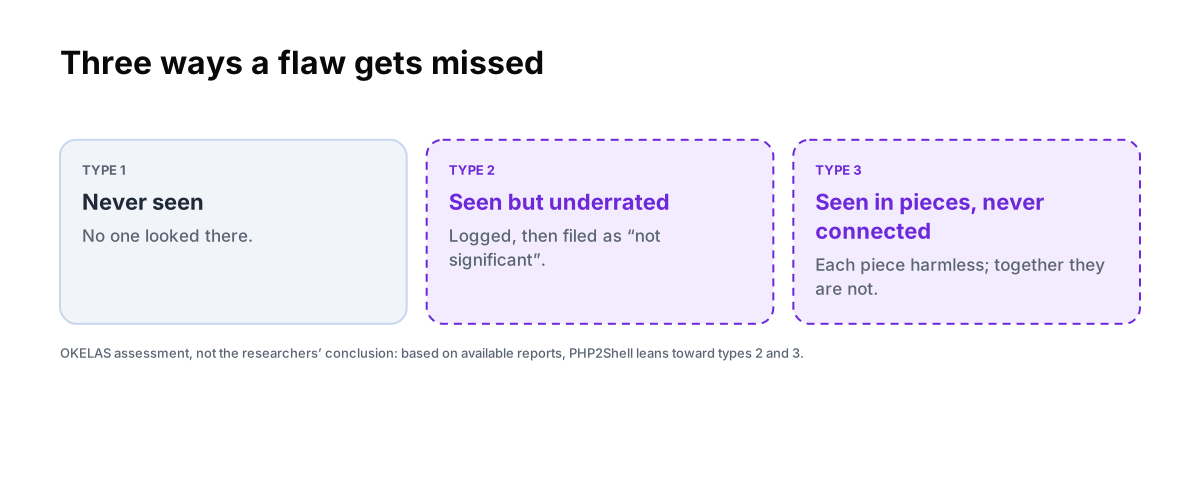
Figure 1. Three different ways of missing something.
It’s tempting to tell this as “AI beats human experts.” One detail complicates that story.
According to OpenAI president Greg Brockman, the flaw had been in PHP for about 14 years, and a limited version of it had been found in 2024 but wasn’t considered significant at the time (Fortune). Calif said it didn’t expect to find anything critical, given how heavily PHP has been reviewed. Wiz put it plainly: the vulnerable code had been there for over a decade, and “what AI changed was the ability to understand the weaknesses.”
In other words, “missing something” comes in at least three forms:
- Not seeing it. Nobody looked there.
- Seeing it but underrating it. It was logged, then filed as “minor.”
- Seeing the pieces but never connecting them. Each piece looks harmless; together they’re dangerous.
Based on the available reporting, PHP2Shell looks closest to forms 2 and 3. That’s our reading, not the researchers’ conclusion.
Inside a business, forms 2 and 3 are usually more common than form 1. The deviation was recorded. The CAPA was closed. The complaint was answered. Everything has a record. Nobody put the records side by side.
Expertise is not the same as coverage
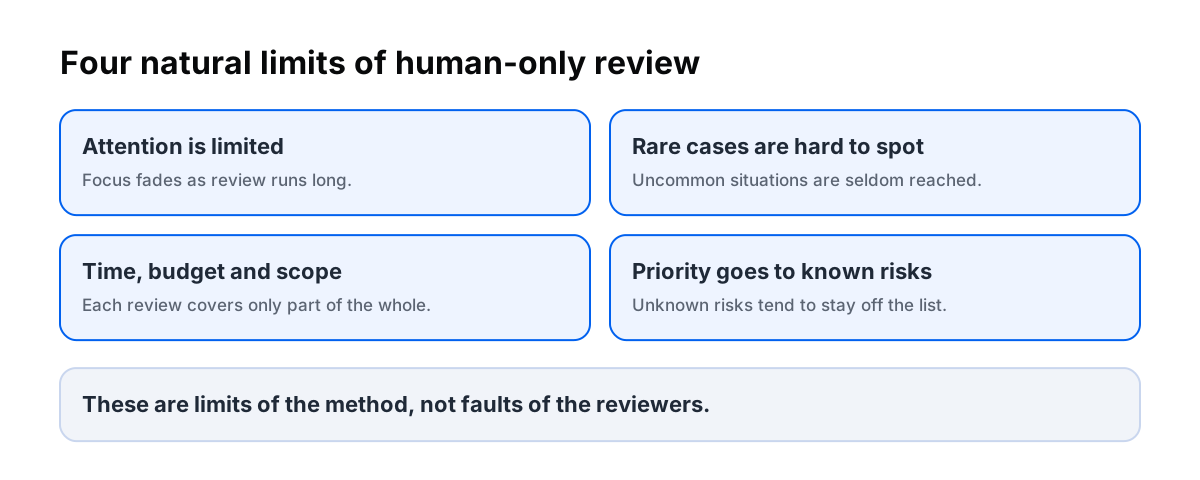
Figure 2. Four natural limits of human-only review.
A strong security engineer can read code, grasp architecture and spot subtle problems. A strong QA manager can review a GMP file thoroughly. The constraint isn’t skill. It’s scale.
Two pieces of evidence are worth knowing:
Attention has limits. A 2006 SmartBear study of a Cisco development team found that defect detection drops sharply once a single review exceeds roughly 200 to 400 lines of code, and that effectiveness declines after about 60 to 90 minutes (SmartBear). It covers one team and one codebase, so treat it as an indicator of human attention limits, not a universal law.
Audits are samples. ISO 19011, the guideline for auditing management systems, acknowledges that audits rely on samples of available information, so audit conclusions always carry some uncertainty. That’s not a flaw in auditors. It’s a rational design when time and budget are finite.
The practical limits follow naturally:
- sustained focus across thousands of details is hard;
- rare cases and unusual combinations slip through;
- time, budget and scope cap what gets checked;
- people prioritize known risks over ones nobody has imagined.
Calif noted that before AI, this kind of manual work was hard to do and harder still to scale (Global Banking & Finance Review). What AI does well isn’t necessarily thinking better than an expert. It does something even a great expert can’t do fully at scale.
So the useful question isn’t “Will AI replace our experts?” It’s this: if your experts gained a review capability they never had before, should the organization keep operating the same way?
“Checked many times” is not “enough evidence”
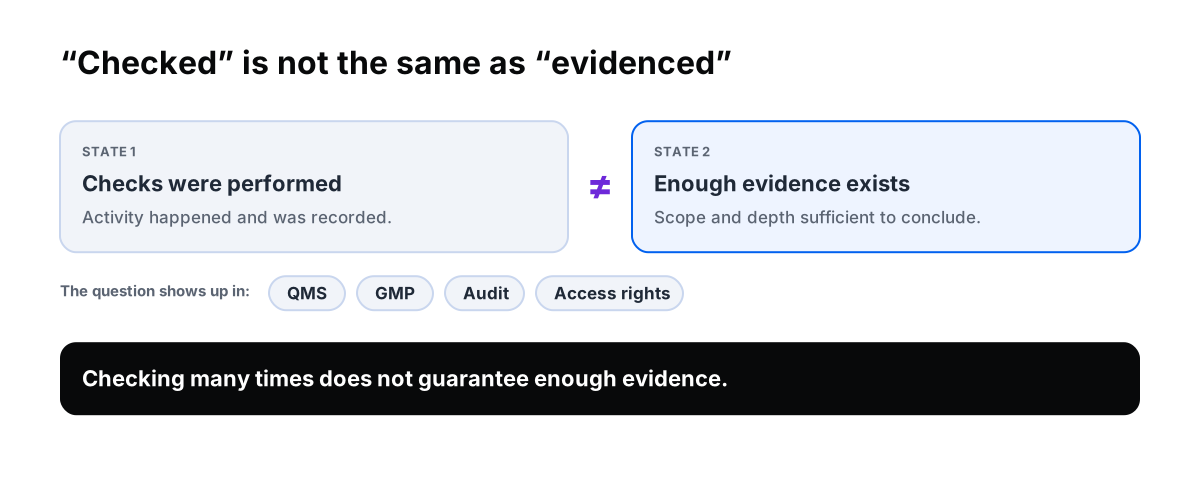
Figure 3. Checked many times is not the same as enough evidence.
PHP is among the most reviewed software on the planet, and it still carried a flaw for over a decade. The management lesson is the difference between having performed checks and having enough evidence to trust the system.
Manufacturers see the same pattern:
- a QMS with complete procedures that still breaks at the handoffs on the shop floor;
- a GMP document set that passed several approval rounds yet contradicts itself across documents;
- a process audited every year while small version mismatches keep slipping through;
- access rights designed correctly that quietly accumulate over time.
These gaps don’t necessarily come from incompetence or carelessness. Often, the volume of detail to cross-check has simply outgrown what people can realistically cover.
AI doesn’t just speed things up. It changes how much you can check
Using AI only to draft documents, write reports or answer questions faster captures a small part of its value. A deeper use is AI as a continuous review layer that can:
- cross-check thousands of documents for contradictions and inconsistencies;
- test the links between requirements, procedures, evidence of execution and outcomes;
- flag rare exceptions routine checks tend to miss;
- trace dependencies across departmental boundaries;
- re-run the review whenever something changes, instead of waiting for the next audit.
Two limits matter.
First, AI widens coverage but doesn’t guarantee it finds everything, and not every AI finding is correct. In PHP2Shell, the value came from researchers verifying the findings, the PHP security team fixing them, and a coordinated disclosure process. AI found the problem; people and process turned it into a patch.
Second, the capability cuts both ways. OpenAI itself acknowledged that the same capabilities can help attackers build exploits quickly (Fortune). When the cost of finding problems collapses, the advantage goes to whoever acts faster after finding them.
In compliance, this may shift expectations. If major customers or auditors can also use AI to cross-check records, inconsistencies that used to be “hard to spot” become easier to surface. It’s unwise to assume your records only need to survive one round of sampling.
So what is AI readiness, really?
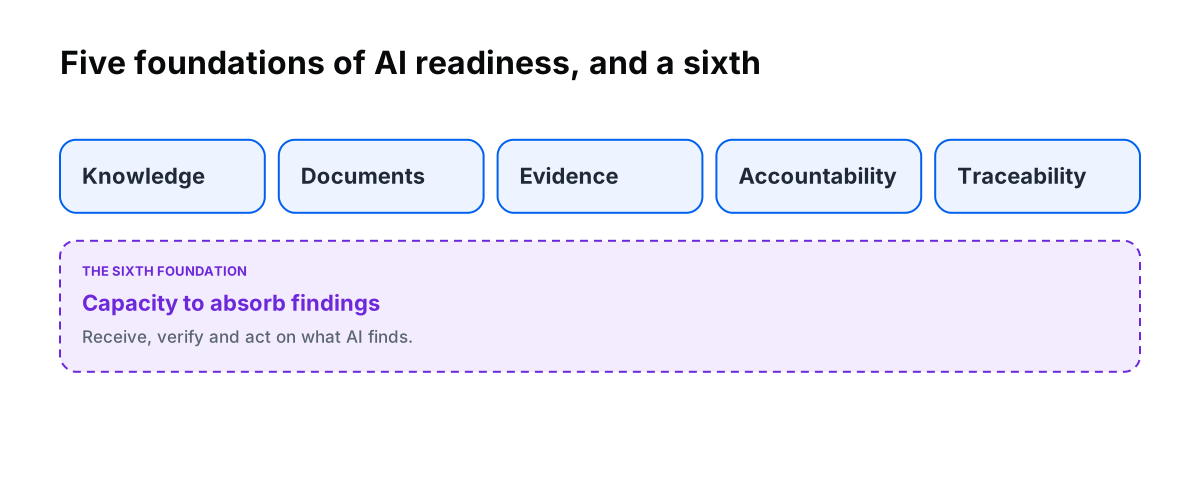
Figure 5. The foundations of AI readiness.
Once AI can surface what used to be nearly invisible, the question is no longer whether you’ve bought AI tools. It’s whether your organization is ready to use what AI finds.
You can run the best model available and still not be ready if five foundations are missing:
| Foundation | Test question |
|---|---|
| Knowledge | Is operational knowledge somewhere AI can read, or scattered across email, chat threads, personal files and people’s memories? |
| Documents | Are documents structured, clearly versioned and traceable to their source? |
| Evidence | Can you tell actual records apart from AI-generated statements? |
| Accountability | When AI flags something, who validates it, who fixes it, who owns it? |
| Traceability | Do you know what data AI relied on, what it concluded, and what people decided? |
There’s a sixth foundation that rarely gets mentioned: the capacity to absorb findings.
AI can help a 50-person company produce as much text as a 500-person one. In the same way, AI can produce as many findings as a far larger audit team. But a 50-person company doesn’t automatically gain the capacity to verify, triage and resolve that volume. If AI returns 200 inconsistencies in your ISO documentation, who reviews them? In what order? By when?
Even PHP’s findings only mattered because there was a mechanism to act on them: an accountable security team, a coordinated disclosure process, and multiple parties working toward a release. Without that, a finding is just another alert in a queue.
AI readiness, then, isn’t only technical readiness. It’s readiness in data, knowledge, process and governance. Without those, AI can generate plenty of observations that the organization can’t verify, prioritize or act on.
Quick self-check: where does your organization stand?
Answer “yes,” “no” or “not sure”:
- Can you find the current version of an SOP, and its change history, in a few minutes?
- Can you show which procedure and which evidence satisfy each requirement, whether from customers, standards or regulation?
- Are deviations, CAPAs and complaints linked, or kept in separate files and logs?
- Does critical operational knowledge live outside email, chat apps and personal files?
- When something abnormal is found, is it defined who validates it, who handles it, and by when?
- Is AI-generated content kept separate from original records and evidence?
- Can you trace who decided what, based on which information?
- If 200 findings landed tomorrow, do you have a way to prioritize them?
If most answers are “no” or “not sure,” the gap is likely in your foundations, not in your choice of AI tool. These are discussion prompts for internal use, not a standardized scale.
For a fuller view across data, process, knowledge, governance, integration and workflow, take the AI Readiness Assessment.
Before AI can audit your business, you need something auditable
The lesson from PHP2Shell isn’t “use AI to review your records.” It’s that AI can only review reliably when there is a body of knowledge and evidence it can actually check. PHP’s source code is structured text with full change history and clear owners. Most of a manufacturer’s operational knowledge isn’t.
That’s also how OKELAS approaches AI: not starting from a chatbot, but from connecting processes, documents, events and evidence into one operational context. In that setting, every AI finding can be explained, checked against evidence, traced to its source, and routed into a workflow with a named owner.
Conclusion
AI doesn’t make people less valuable. It exposes the limits of systems built on the assumption that people can check, remember and control everything.
So the question for leadership isn’t whether AI will find problems in your organization. It’s this: when it does, will you know whether the finding is real, who owns it, and whether it has been fixed?
Next steps
- Take the AI Readiness Assessment to see which foundation is weakest.
- Read the pillar: Why AI doesn’t make an organization intelligent unless it’s ready
- Continue with: AI readiness: six conditions for AI to be useful in operations
- Related: Evidence-based AI · AI and compliance in ISO/GMP environments · Why audit preparation takes weeks
This article is a management perspective, not security, compliance or legal advice.
Sources
- Wiz Research, PHP2Shell: AI uncovers critical RCE vulnerabilities, Oct 21, 2026. https://www.wiz.io/blog/php2shell-php-rce
- watchTowr, PHP2Shell FAQ: CVE-2026-109618 & CVE-2026-109619, updated Oct 22, 2026. https://watchtowr.com/intelligence/php-cve-2026-109618-faq/
- Fortune (Emily Forlini), AI tools discovered the PHP vulnerability…, Oct 21, 2026, updated Oct 22, 2026. https://fortune.com/2026/10/21/ai-tools-discovered-the-php-vulnerability-that-could-take-down-70-of-the-internet-now-the-race-is-on-to-patch-it-before-ai-powered-hackers-attack/
- Technology.org, OpenAI Proposes Five-Stage Disclosure Plan After AI Found Critical PHP Flaws, Oct 23, 2026. https://www.technology.org/2026/10/23/openai-php2shell-disclosure-framework-finland-websites-offline/
- The National, PHP security flaw: Websites taken down…, Oct 21, 2026. https://www.thenationalnews.com/future/technology/2026/10/21/php-security-issues-exploit/
- Global Banking & Finance Review, Government websites go dark after AI-discovered flaw…, Oct 2026. https://www.globalbankingandfinance.com/cyber-agency-warns-websites-go-dark-php-prepares-critical/
- SmartBear, Best Practices for Code Review (summary of the 2006 SmartBear–Cisco study). https://smartbear.com/learn/code-review/best-practices-for-peer-code-review/
- ISO 19011, Guidelines for auditing management systems.
Does this describe your organization?
Does this sound familiar to your organization?