What Gets Thrown Away With the Cover Note
2026-10-24
In many companies, an approval file rarely reaches the director’s desk on its own. Clipped to the front is a single sheet of paper.
It holds a few lines: what the file is about, where the problem lies, who has handled it so far, what the staff member recommends, and what exactly the director needs to decide.
The director reads the sheet before opening the file. Sometimes they write their decision straight onto it: “Approved. Supplier to provide a certificate of analysis for the next 3 batches.” The file is signed. Work moves on.
The sheet is unclipped. Quite often, it goes in the bin.
This is not an argument against cover notes. Writing one is good practice. The question is a different one: when that sheet disappears, what has the organization actually lost?
Executive summary
- The cover note is often the only record of how staff interpreted the evidence and why leadership made the call.
- Records systems usually keep the original documents and the signature, and drop the reasoning in between.
- The cost doesn’t show up today. It shows up when a similar case returns, when the person who knew leaves, or when someone asks you to justify the decision.
- AI can write cover notes faster. It does not decide where they are kept or which decision they stay attached to.
The smallest page is the most expensive one
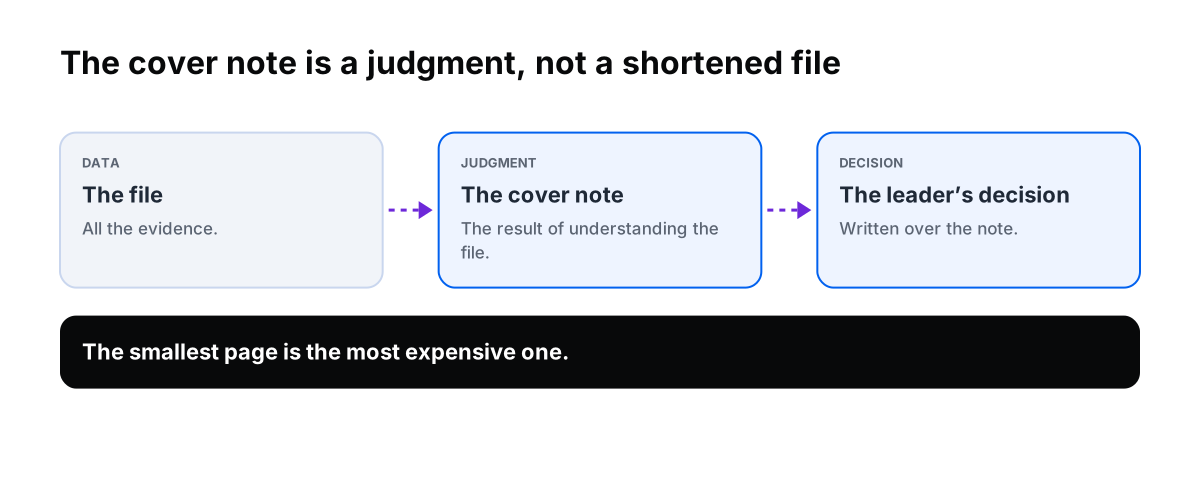
Figure 1. From data to judgment and decision.
Consider what it takes to write those five lines.
The writer reads the whole file. Checks it against procedures, contracts, test results or how a previous case was handled. Discards what doesn’t matter. Picks the two or three pieces of evidence that do. Then forms a judgment: approve, reject, or approve with conditions.
The cover note is not a shorter copy of the file. It is the result of understanding the file.
In knowledge management terms, this is the moment when one person’s experience and judgment (tacit knowledge) is written down in a form others can use (explicit knowledge). Nonaka and Takeuchi called this step externalization, and treated it as one of the hardest parts of how organizations create knowledge.
If the file is data, the cover note is the first point where that data becomes a judgment someone can act on. The director’s handwritten decision is the second.
Systems keep the outcome, not the reason
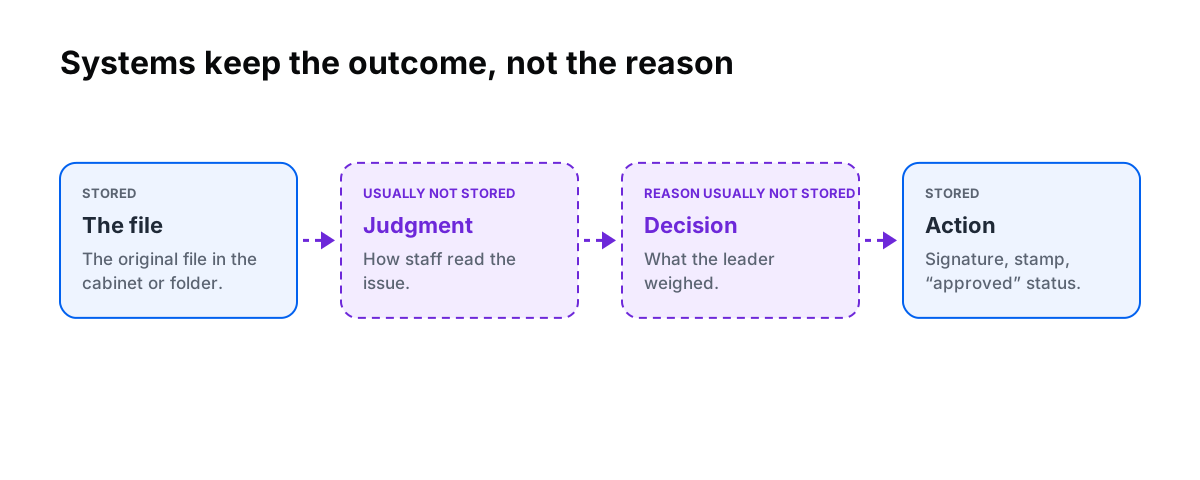
Figure 2. Both ends are stored; the middle is usually lost.
A business decision typically moves through:
File → Judgment → Decision → Action
What gets retained is usually the two ends: the original documents in a cabinet or shared drive, and the outcome (a signature, a stamp, an “Approved” status in the software). The middle — how staff understood the issue, what leadership weighed — sits on a sheet with no reference number, no form, and no owner.
A few months later, these questions are hard to answer without tracking down whoever was involved:
- Why did this file get attention when others didn’t?
- Which evidence led to the recommendation?
- Which options were rejected, and why?
- What conditions came with the approval?
- Is this decision consistent with earlier ones?
Moving approvals into software doesn’t automatically fix this. In many companies with digital approval workflows, the reasoning still happens in chat apps, email threads or a quick conversation in the corridor, while the system records a single click on “Approve”.
The cost arrives later
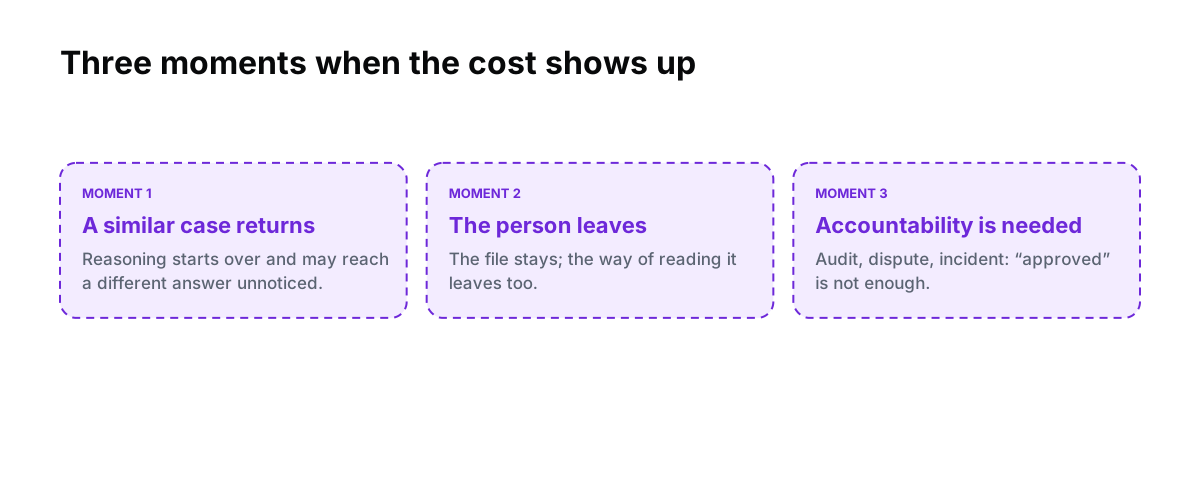
Figure 3. The cost arrives later, at three moments.
Throwing away one cover note does no harm on the day. That is exactly why the problem is easy to miss.
Situations like this tend to resurface at three points:
- When a similar case comes up. Someone reasons it through from scratch and may reach a different conclusion, without anyone noticing the inconsistency.
- When people leave. The files stay; the way of reading them walks out the door.
- When you have to justify a decision. In an audit, a dispute or a quality incident, “it was approved” is not enough. People want to know on what basis.
The result is a familiar paradox: thousands of carefully archived files, and a company that still has to ask key people for the reasoning.
The note is not the problem
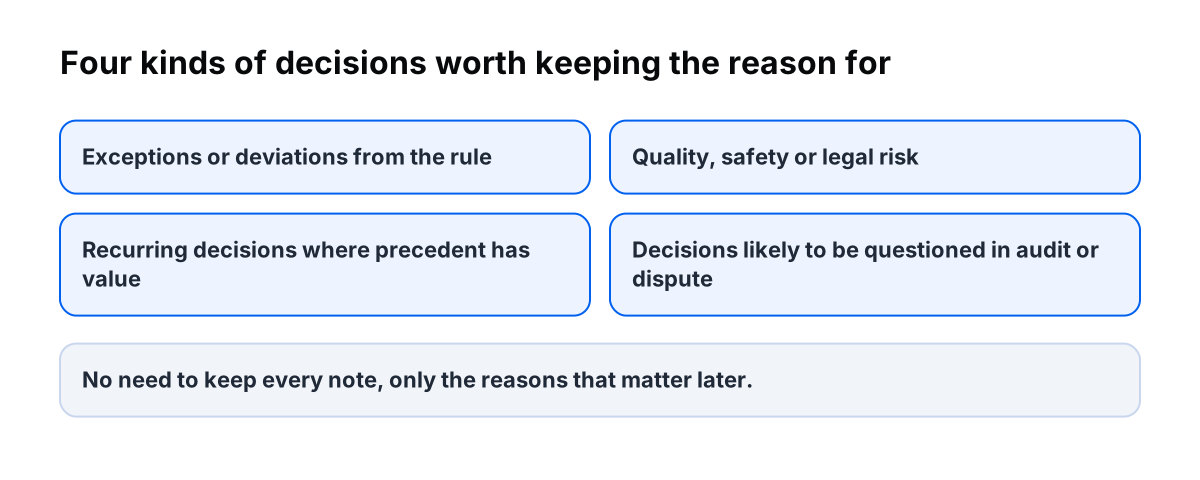
Figure 4. Not every note, only the right kinds of decisions.
The obvious reaction is to keep every cover note. Scan it, attach it, number it.
That is almost certainly the wrong move.
Most notes are only useful for a day. Some contain candid views their authors would not want in the official record, often for good reasons. Keeping everything just creates another pile of documents nobody reads.
The problem is not the paper. It is that the organization produces a valuable layer of knowledge and never designed a place to keep it: which decisions need their reasoning retained, where it lives, which file and evidence it is linked to, and who can see it later.
In practice, only certain decisions need this:
- exceptions and deviations from procedure;
- decisions carrying quality, safety or legal risk;
- recurring decisions where precedent matters;
- decisions likely to be questioned in an audit or a dispute.
For companies working to ISO 9001, the idea isn’t new. ISO 9001:2015 includes a dedicated clause, 7.1.6, on organizational knowledge: the organization determines the knowledge needed to operate its processes, maintains it, and makes it available to the extent necessary.
When AI writes the cover note
Look closely and the work behind a cover note is what people now expect from AI at work: read the documents, find the relevant evidence, summarize, and present a judgment for someone with authority to decide.
AI already does this. An employee can drop a file into an AI tool and get a summary in seconds.
But if that summary lives in a chat window that gets closed, the company is repeating the cover-note story, only faster and at higher volume. AI makes judgments easier to produce. It does not decide which file and which decision they stay attached to, or whether anyone can find them next year.
The reverse is also true. AI is only really useful when the organization has kept the link between evidence, judgment and past decisions. An AI that can’t see why earlier decisions were made can summarize today’s file. It can’t tell you how a similar case was handled before, and why.
A quick self-check: how much of your reasoning do you keep?
Pick an important decision approved 6 to 12 months ago: accepting a non-conforming batch, switching suppliers, or approving an exception to a procedure. Then ask:
- Can you find the original file within 10 minutes?
- Can you find why the decision was made, without asking the people involved?
- If it came with conditions, do you know whether they were met?
- If the person who proposed it has left, could their replacement understand the decision?
- When a similar case comes up, would the person handling it know there is a precedent?
If the answer to question 1 is yes but questions 2 to 5 are mostly no, you are keeping records reasonably well, but not knowledge.
What actually ends up in the bin
Knowledge doesn’t only fragment when documents are scattered across too many places. It also fragments when what people understood, weighed and used to decide is not kept together with the evidence and the outcome.
Sometimes that fragmentation starts with a single cover note.
And ends in the bin.
Next steps
- Take the Knowledge Management Maturity Assessment to see how much of the knowledge your company creates it actually keeps.
- Read more on organizational knowledge and decision-making in our knowledge management collection.
References
- ISO 9001:2015, Quality management systems — Requirements, clause 7.1.6 Organizational knowledge. International Organization for Standardization.
- Nonaka, I. & Takeuchi, H. (1995). The Knowledge-Creating Company. Oxford University Press.
Does this describe your organization?
Does this sound familiar to your organization?