
The Boss Sent It to the Building Group Chat: A Funny Slip or a Management Problem?
2026-10-24
The scenario below is an illustrative example, not a real incident.
The managing director reads the monthly sales report, isn’t convinced, and fires off a message:
“Sales team, redo this report. The numbers don’t hold up. On my desk by 3 p.m.”
A few minutes later, someone replies. It isn’t the head of sales.
“Sir, this is the residents’ group for Block B.”
Silence in the chat. Probably longer silence on the director’s end.
It’s funny. But the interesting part isn’t the wrong tap. It’s that, for many managers, handling work has become a reflex: something comes up, open the chat app, find a group, type a line. Fast, convenient, direct. And occasionally risky.
The real question is this: even when the message lands in the right group, does working this way actually get the work done better?
Executive summary
- Group chat isn’t the problem. The problem is that it has quietly become the default place where work gets handled, although it was built for conversation.
- The visible risk is information leaking. The less visible risk is work with no clear owner, no status and no point of closure.
- The largest long-term cost is fragmented knowledge: the decision survives, but the reasoning and context do not.
- The fix isn’t banning chat. It’s a clear division: chat for conversation, workflow for execution, records for outcomes.
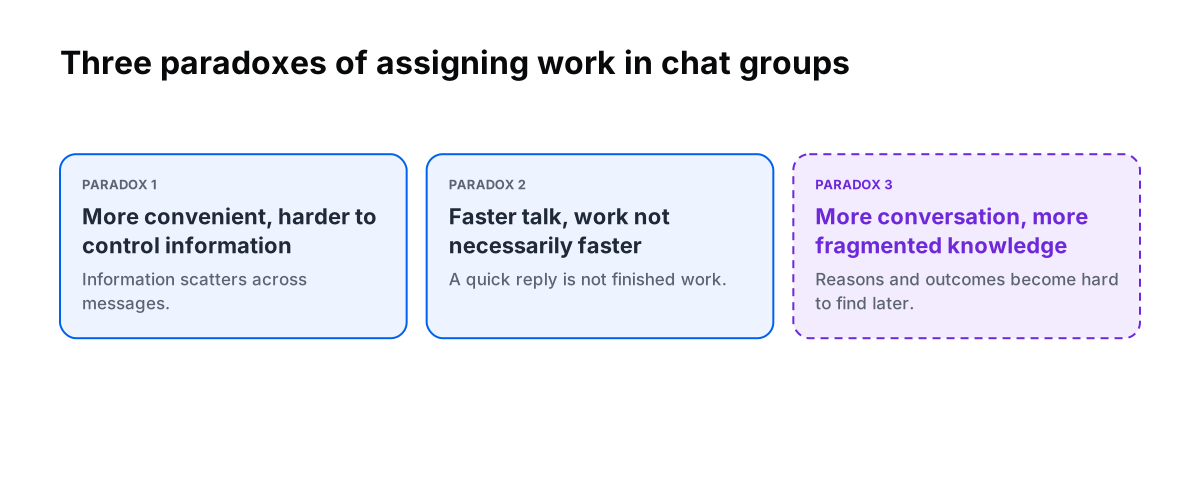
Figure 1. Three paradoxes of assigning work in chat groups.
Paradox 1: The more convenient it is, the harder information is to control
In our scenario, the message was a single sentence. Had the report been attached, a group of neighbours would now hold sales figures, customer names and perhaps internal issues nobody had announced yet.
The misdirected message is a symptom. The underlying issue is that sensitive information is being handled in a space the company can’t fully govern: who is in the group, who left the company but never left the chat, which personal phones the files were downloaded to, where messages are stored and for how long.
For a manufacturer with export customers, quality records or contractual confidentiality obligations, this is more than an embarrassing moment. It is a question of where the organization’s information control boundary actually sits.
Paradox 2: Communication gets faster, but work doesn’t necessarily finish faster
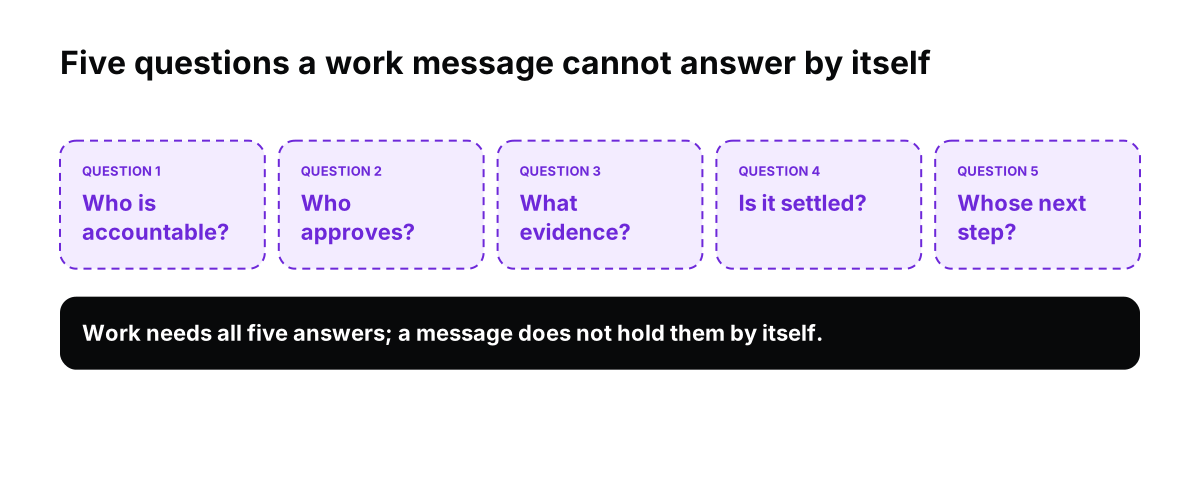
Figure 2. What work needs and a message does not hold.
A message can settle a question instantly. What it doesn’t do, by itself, is answer what the work needs:
- Who owns this?
- Who has authority to approve it?
- What data or evidence is required?
- Has the decision been made?
- Whose move is next?
The conversation is over in minutes. The work still has to go back through the real process: approval, record updates, notifying other departments. Often it creates extra work, because someone has to scroll back through dozens of messages to piece things together, then chase the people who read the message but didn’t act on it.
Communication speeds up. Completion doesn’t automatically follow.
Paradox 3: More conversation, more fragmented organizational knowledge
This is the hardest cost to see, and the largest over time.
Follow the same “redo the report” request through the organization:
- The director posts in the group: “Redo it, the numbers don’t hold up.” Which numbers, and why, is never written down.
- Staff ask questions, explain, share files. The context is scattered across the thread, mixed in with unrelated messages.
- The report is revised and resent. There are now three files: “report_final”, “final2”, “final_revised”. Which is the real one? Who signed off? Why did the figures change?
- The work still isn’t finished. It needs approval, an update to the official figures, and a heads-up to other teams.
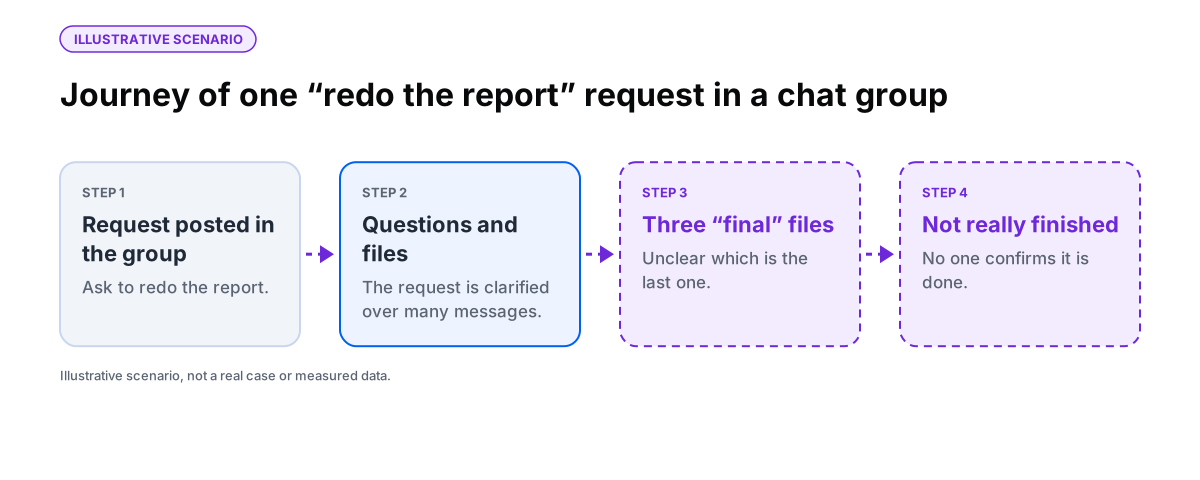
Figure 3. Journey of a request in a chat group (illustrative scenario).
Six months later, a new department head asks: “Why did we revise the Q3 forecast last year?” The answer is somewhere between a team chat, an email, a few spreadsheets and the memory of two people, one of whom has since left.
A group chat records the conversation. But recording a conversation is not the same as managing the work. An operating system for a business needs to know:
- What was the original request?
- Who was responsible for delivering it?
- What information and evidence were used?
- What was decided, and by whom?
- Where does the work stand, and who owns the next step?
When those answers aren’t tied together in a structured work record, the company depends on each individual’s memory, search skills and interpretation. That is how knowledge fragments: the company keeps its decisions but gradually loses the reasons behind them.
Three habits, three consequences
| Chat habit | What’s really going on | Consequence |
|---|---|---|
| Sharing documents and figures across many groups | Information sits outside an appropriate control boundary | Security and compliance exposure |
| Giving instructions, assigning tasks and approving by message | A conversation is not a managed workflow | Work stalls; accountability blurs |
| Decisions and their rationale living in threads | Knowledge isn’t linked to records, processes or evidence | Hard to retrieve, hand over or learn from |
These aren’t three separate problems. They share one root: information, decisions and work progress aren’t managed as connected parts of a single system.
Don’t ban chat. Put it in its place.
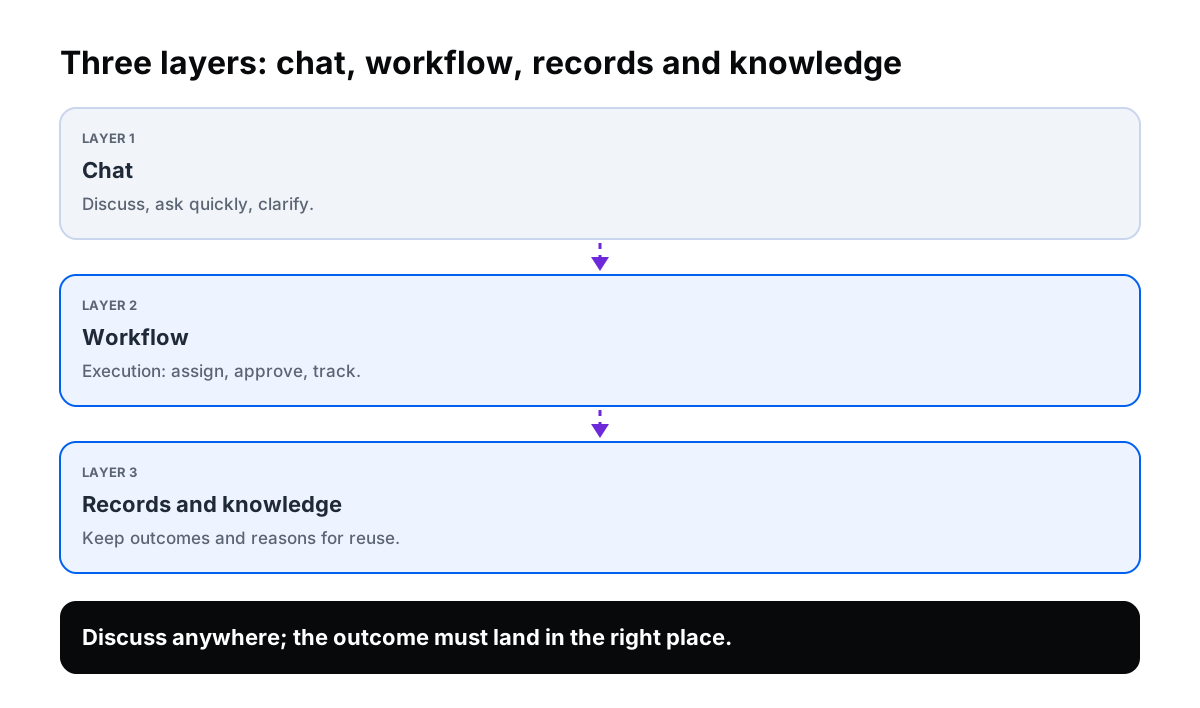
Figure 4. Putting chat in its place among three layers.
The lazy conclusion is “stop using WhatsApp (or Zalo, or Teams chat) for work”. It’s neither realistic nor right.
Chat is genuinely useful for clarifying issues, discussing options, quick announcements and real-time coordination. The trouble starts when a conversation creates an obligation, changes the status of work, grants an approval or makes an important decision, and the outcome stays buried in the thread.
A simple way to separate the layers:
| Layer | Role | Examples |
|---|---|---|
| Chat | Where people talk | Quick questions, option discussion, announcements, real-time coordination |
| Workflow | Where work gets done | Assigning ownership, tracking status, approval by the right authority |
| Records and organizational knowledge | Where outcomes are kept | Decisions, evidence, versions, rationale, history |
The rule of thumb: discuss wherever you like, but the outcome has to land in the right place. When a conversation ends in a decision, someone must own the job of moving that decision, with its rationale and evidence, to where the organization can find it again.
The goal isn’t to move every conversation into another piece of software. It’s to make sure what matters to the business doesn’t disappear into the message stream.
Quick check: is your company run on process or on messages?
Answer six questions:
- Are approvals (quotes, orders, plan changes) usually closed with an “OK” in chat?
- Is asking in the group the fastest way to find out where a task stands?
- Are former employees still members of work chat groups?
- Do internal documents (reports, price lists, customer files) get shared across multiple groups?
- When someone new takes over a role, is the main handover “scroll back through the chat”?
- When you need to explain an old decision to an auditor, a customer or the board, do you have to ask several people to piece it together?
If most answers are “yes”, the issue probably isn’t the chat tool. It’s that the company has no clear place where work is executed and knowledge is retained.
Conclusion
A director posting in the wrong group is a funny story for one morning. A company where instructions, approvals and the reasons behind decisions all live in message threads is not.
A business doesn’t run better just because people talk to each other faster. It runs better when those conversations produce clear decisions, finished work and knowledge that doesn’t get lost.
Does this describe your organization?
Does this sound familiar to your organization?